

In today’s competitive digital world, getting traffic is easy—but getting the right leads is not.
That’s where lead generation becomes the backbone of any successful business, whether you sell to businesses (B2B) or directly to consumers (B2C).
If you’re a business owner, marketer, startup founder, or agency client asking:
👉 What exactly is lead generation?
👉 How does it work for B2B and B2C?
👉 Why do some businesses get consistent leads while others struggle?
This guide will answer everything—step by step, in simple language.
What Is Lead Generation?
Lead generation is the process of attracting potential customers and collecting their contact information so they can be converted into paying clients.
A lead can be:
- A business owner requesting a quote
- A decision-maker booking a demo
- A user filling out a contact form
- Someone showing interest in your product or service
In simple terms:
👉 Lead generation = turning interest into opportunity.
Why Lead Generation Is Important for Businesses
No leads = no sales.
No sales = no growth.
Here’s why lead generation is critical:
- It brings targeted prospects, not random visitors
- It helps businesses predict revenue
- It reduces dependency on referrals only
- It creates a scalable growth system
- It allows better marketing ROI
Whether you’re a startup or an established brand, lead generation keeps your sales pipeline alive.
How Lead Generation Works (Step-by-Step)
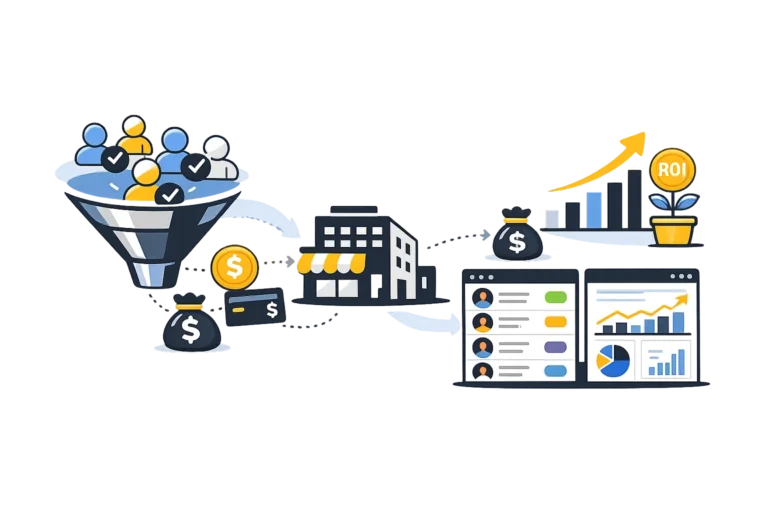
A successful lead generation system usually follows this flow:
1. Identify the Target Audience
This includes:
- Industry or niche
- Location (local, national, worldwide)
- Business size
- Decision-maker role
- Buyer intent
Without proper targeting, even high traffic won’t convert.
2. Attract the Right Traffic
Traffic is generated using:
- Search engines (SEO)
- Paid ads (Google, social media)
- Cold outreach (email, LinkedIn)
- Content marketing
- Landing pages
The goal is quality over quantity.
3. Capture Lead Information
Once users show interest, their data is collected through:
- Contact forms
- Quote request forms
- Demo bookings
- Email opt-ins
This is where a visitor officially becomes a lead.
4. Qualify & Verify Leads
Not every lead is sales-ready.
Lead qualification ensures:
- Correct contact details
- Relevant interest
- Real buying intent
High-quality leads save time and increase conversions.
5. Nurture & Convert
Some leads convert immediately.
Others need follow-ups, emails, or calls.
This is where lead nurturing improves ROI.
B2B Lead Generation Explained
B2B (Business-to-Business) lead generation focuses on connecting with decision-makers inside companies.
Common B2B Leads Include:
- CEOs & Founders
- Marketing Managers
- Sales Heads
- Operations Directors
B2B Lead Generation Channels:
- LinkedIn outreach
- Cold email campaigns
- SEO for service keywords
- PPC ads
- Account-based marketing
B2B Challenges:
- Longer sales cycles
- Higher decision complexity
- Need for trust & authority
That’s why targeting + qualification is extremely important in B2B.
B2C Lead Generation Explained
B2C (Business-to-Consumer) lead generation targets individual buyers instead of companies.
Common B2C Leads Include:
- Home service customers
- E-commerce buyers
- Coaching & course seekers
- Local service inquiries
B2C Lead Generation Channels:
- Social media ads
- Google search ads
- Local SEO
- Landing pages
- Retargeting campaigns
B2C Focus:
- Emotion-driven decisions
- Faster conversions
- High-volume leads
Speed and clarity matter more in B2C.
Exclusive Leads vs Shared Leads
One of the biggest questions businesses ask is:
Should I buy exclusive leads or shared leads?
Exclusive Leads
✔ Sent only to one business
✔ No competition
✔ Higher conversion rates
✔ Better ROI
Shared Leads
✘ Sold to multiple businesses
✘ High competition
✘ Lower trust & conversion
For serious growth, exclusive leads always perform better.
Pay-Per-Lead: What Does It Mean?
In Pay-Per-Lead services, businesses pay only for verified leads—not impressions or clicks.
Benefits:
- Predictable costs
- No wasted ad spend
- Better control over lead quality
- Ideal for service-based businesses
This model works well when combined with proper targeting and verification.
Local vs Global Lead Generation
Local Lead Generation
- Targets a specific city or region
- Ideal for service providers
- High intent & faster conversions
Global / Worldwide Lead Generation
- Targets multiple countries
- Ideal for SaaS, agencies, consultants
- Requires advanced targeting
A strong lead generation partner adapts strategies based on geography.
Common Lead Generation Mistakes to Avoid
❌ Chasing cheap leads
❌ Ignoring lead qualification
❌ No follow-up system
❌ Poor targeting
❌ Expecting instant sales
Lead generation is a system, not a shortcut.
How Professional Lead Generation Services Help
Working with experts helps businesses:
- Save time & resources
- Avoid trial-and-error
- Get consistent, scalable results
- Focus on closing deals
At LeadGenerationHive, strategies are customized based on:
- Business model
- Niche
- Budget
- Growth goals
👉 You can explore service details here:
https://leadgenerationhive.com/
👉 Check pricing plans:
https://leadgenerationhive.com/pricing/
👉 Request a custom quote:
https://leadgenerationhive.com/get-a-quote/
Final Thoughts
Lead generation is not about collecting emails—it’s about building a predictable growth engine.
Whether you’re:
- A B2B company targeting decision-makers
- A B2C brand looking for high-intent customers
- A local business or global agency
The right lead generation strategy can transform your business.
If done correctly, lead generation doesn’t feel like marketing—it feels like momentum.